


Glass Cloth Crunch
Most people have never seen the material that is now one of the tightest links in the AI supply chain. Glass fiber cloth - the woven fabric that gives copper-clad laminate its structure - has become scarce and increasingly expensive as AI servers and high-speed networking consume more high-end boards. According to a November 22, 2026 report in Taiwan's TaiSounds, high-end glass cloth is in persistent shortage, gross margins at suppliers have climbed from roughly 10-20 percent to 40-60 percent, and quartz cloth is emerging as the next battleground.
Industry Update
Glass cloth is woven from glass fiber yarn and combined with resin and copper foil to form CCL, which is then processed into PCBs. It provides insulation, heat resistance, strength and low water absorption, and holds the board flat when circuits run hot - without it, high-performance chips cannot operate reliably on a board that warps. The supply chain runs from glass yarn and cloth upstream, through CCL in the middle, to PCBs, IC substrates and high-layer-count boards downstream, serving AI servers, data centers, 800G/1.6T networking and CoWoS/SoIC advanced packaging.
Capacity cannot respond quickly: building glass cloth capacity takes 9-18 months, and customer certification another 24-36 months. High-end grades such as Low-Dk2 and T-Glass are especially tight, with T-Glass the scarcest. Analysts cited in the report expect the high-end gap to persist through 2027-2028, supported by three factors: structural upgrades driven by AI, strong pricing power at margins of 40-60 percent, and the difficulty of rapid expansion given formulation, equipment and certification limits. Manufacturing bottlenecks are around fiber drawing, weaving and surface treatment; quartz cloth (Q-Glass) requires furnace temperatures of 1,700-2,000 degrees Celsius and redesigned drilling, laser and desmear processes, but offers lower thermal expansion and better dielectric performance - and is already being used in next-generation CCL grades such as M9, with Taiwanese laminate makers launching quartz-cloth-based products.
What It Means for SMT Lines
- Material lead times are shifting project schedules: high-end laminates built on scarce cloth need to be ordered earlier, with buffer built into new product launches.
- Design-for-supply matters: layer count, material grade and panel design determine how much scarce high-end cloth each product consumes.
- Crowding out is real - suppliers shifting capacity to high-end cloth also tighten standard E-glass supply, so even mainstream boards face longer lead times.
- Qualification takes years; factories should validate alternative laminates and suppliers well before shortages hit production.
- Cost escalation should be passed through with data, and contracts should include material-index clauses for long programs.
Outlook
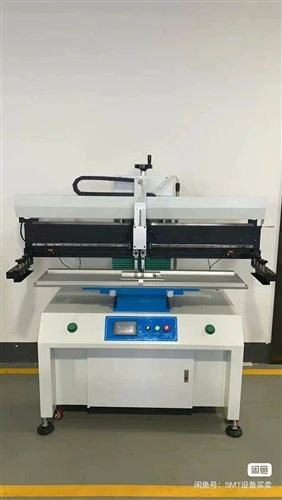
Glass cloth and quartz cloth will remain strategic materials through 2028, and the transition to M9-class laminates will decide which PCB and PCBA suppliers can serve the highest-value AI programs. For SMT factories, the practical response is to treat board materials as part of production planning, not just purchasing - early qualification, transparent supplier communication and efficient line utilization. HWGC, a China SMT machine manufacturer, supplies four-head to twelve-head pick and place machines, reflow soldering ovens, solder paste printers, wave soldering systems, PCB loaders, conveyors and AOI/SPI inspection equipment, helping factories keep output stable while material supply stays tight.
Foreign Trade Sales: Mr. Sun
Phone · WhatsApp · WeChat: +86 18210740377
Email: zghwgc@gmail.com
Website: www.smthw.com
Factory Address: Building 21, Junding Science & Technology Park, Shiyin Village, Luquan District, Shijiazhuang, Hebei, China


