PCB Crunch Alert
A leading industry association has issued a formal warning about printed circuit board supply, and the numbers behind it deserve attention from every SMT factory. According to CCTV Finance reporting on November 21, 2026, the US-based Global Electronics Association - the IPC - says PCB shortages are severe and could become a new drag on AI and electronics industry growth. In the 12 months to September 2026, PCB orders grew 56.1% while shipments grew only 13.3%, a widening gap between what customers are booking and what factories can deliver.
Industry Update
The association expects the supply-demand imbalance to last at least through the first half of 2027, with no substantive relief likely before mid-2028. Asia produces more than 90 percent of the world's PCBs, but new capacity is constrained upstream. A typical personal computer board has about 12 layers, while AI server boards reach 40 to 60 or more layers - and every additional layer consumes more glass fiber cloth, resin, copper foil and copper-clad laminate. The AI server demand surge has made already-tight material supply worse, further limiting how fast high-layer-count capacity can grow.
The customer impact is uneven. Hyperscale cloud providers have locked up most of the high-end capacity, pushing automotive, industrial and medical customers down the queue. The association noted that nearly every electronic device depends on PCBs, so delays ripple into semiconductor investment and final system assembly - and it assesses the supply risk as potentially comparable to the 2021 global chip shortage. For SMT factories, this is not an abstract industry statistic: it changes how boards are ordered, how projects are scheduled and how customer expectations must be managed.
What It Means for SMT Lines
- Treat bare-board supply as a critical path item: book capacity early and confirm commitments in writing, not just by verbal assurance.
- Negotiate allocation and escalation clauses with PCB suppliers, and track actual delivery performance weekly rather than monthly.
- Customer communication is part of production planning - explain lead-time changes early with data on board lead times and material constraints.
- Design decisions matter: layer count, panel utilization and material grade all affect how much scarce PCB capacity each product consumes.
- Where possible, qualify second PCB sources for key products before shortages force a scramble.
- Protect line utilization: even with full order books, missing boards stop SMT lines, so buffer strategically at the finished-board level.
Outlook
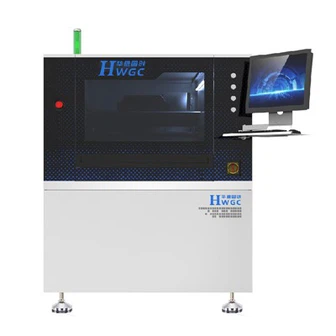
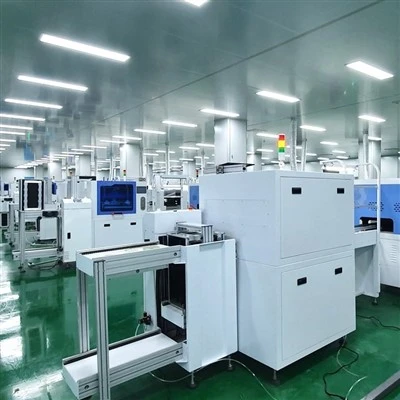
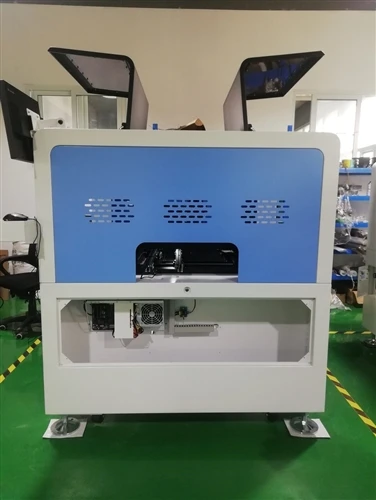
The shortage is expected to persist into 2027 and possibly beyond, with high-end AI boards taking priority and conventional products waiting longer. For SMT factories, resilience comes from earlier planning, transparent supplier relationships and flexible equipment that can switch between products without wasting scarce capacity. HWGC, a China SMT machine manufacturer, supplies four-head to twelve-head pick and place machines, reflow soldering ovens, solder paste printers, wave soldering systems, PCB loaders, conveyors and AOI/SPI inspection equipment, helping factories keep output stable and efficient while board and material supply remain tight.
Foreign Trade Sales: Mr. Sun
Phone · WhatsApp · WeChat: +86 18210740377
Email: zghwgc@gmail.com
Website: www.smthw.com
Factory Address: Building 21, Junding Science & Technology Park, Shiyin Village, Luquan District, Shijiazhuang, Hebei, China