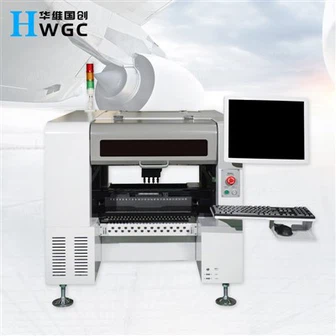
What is the Motion Control System of a High-Speed Pick-and-Place Machine?
What is the Motion Control System of a High-Speed Pick-and-Place Machine?
The motion control system of a high-speed pick-and-place machine is a critical component in Surface Mount Technology (SMT) production lines. It is responsible for controlling the mechanical movements of the machine, including the precise positioning of the placement head, feeders, and conveyor belts. By utilizing high-precision motors, encoders, servo controllers, and advanced control algorithms, the motion control system ensures that the pick-and-place machine can rapidly and accurately pick up electronic components from feeders and place them onto designated positions on a printed circuit board (PCB).
The motion control system is one of the key technologies enabling high-speed, high-precision, and stable operation in pick-and-place machines. It not only determines the placement efficiency of the machine but also directly impacts the quality and consistency of the final product.
Key Components of a Motion Control System
Motors: High-performance motors, such as servo motors or stepper motors, provide the necessary torque and speed for precise movement control.
Encoders: Encoders are used to measure the position and speed of moving parts, providing real-time feedback to the control system.
Servo Controllers: These devices regulate the operation of the motors, ensuring smooth and accurate movements.
Control Algorithms: Advanced algorithms process feedback data and generate control signals to optimize the motion of the machine.
Functions of the Motion Control System
High-Speed Movement: The system enables the placement head to move quickly between the feeder and the PCB, maximizing throughput.
Precision Positioning: It ensures that components are placed on the PCB with micron-level accuracy, which is essential for the functionality of electronic devices.
Synchronization: The motion control system coordinates the movements of multiple components, such as the placement head, feeders, and conveyor belts, to ensure seamless operation.
Dynamic Adjustment: The system can adapt to changes in component size, shape, and placement requirements in real-time.
Importance of the Motion Control System in High-Speed Pick-and-Place Machines
The motion control system plays a vital role in achieving the high performance required in modern SMT production. Its importance can be summarized as follows:
High Efficiency: By enabling fast and precise movements, the motion control system significantly increases the placement speed and overall production efficiency.
Accuracy and Consistency: The system ensures that components are placed accurately and consistently, reducing defects and improving product quality.
Flexibility: Advanced motion control systems can handle a wide range of component types and sizes, making the machine adaptable to diverse production needs.
Stability: The system maintains stable operation even at high speeds, minimizing vibrations and ensuring reliable performance.
Challenges and Innovations
As the demand for faster and more precise pick-and-place machines grows, motion control systems face several challenges and opportunities for innovation:
Higher Speeds: To meet the increasing throughput requirements, motion control systems must support even faster movements without sacrificing accuracy.
Improved Precision: Advanced encoders and control algorithms are being developed to achieve sub-micron level placement accuracy.
Energy Efficiency: Innovations in motor design and control strategies aim to reduce energy consumption while maintaining high performance.
Integration with AI: Artificial intelligence (AI) is being integrated into motion control systems to optimize movement patterns and predict potential issues before they occur.
Conclusion
The motion control system is the backbone of a high-speed pick-and-place machine, enabling the rapid and precise assembly of electronic components onto PCBs. With continuous advancements in motor technology, control algorithms, and AI, motion control systems are becoming even more powerful and efficient, helping manufacturers meet the ever-growing demands of the electronics industry.
In summary, the motion control system is an indispensable part of modern SMT production lines, ensuring high-speed, high-precision, and reliable operation. Its role in achieving efficiency and quality makes it a critical technology for the future of electronics manufacturing.