Essential Terminology for Beginners in the Pick-and-Place Machine Industry
If you are new to the pick-and-place machine industry, you may find the terminology confusing at first. Luckily, with a little bit of guidance, you can quickly become familiar with the most commonly used terms and phrases. Here are some essential terms to know:
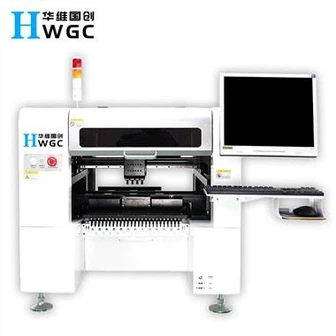
1. Pick-and-Place Machine: An automated machine that picks up electronic components and places them on a printed circuit board (PCB).
2. Feeders: These are the component holders that feed the pick-and-place machine with electronic components.
3. Vision System: A camera system that provides the pick-and-place machine with the ability to properly align components to a PCB.
4. Placement Accuracy: The machine's ability to place components in the exact location on the PCB.
5. Component Center-to-Center Distance: The distance between the centers of two adjacent electronic components on a PCB.
6. Nozzle: The component pick-up tool that is used by the pick-and-place machine.
7. Feeders Capacity: The amount of electronic components that can be held by a feeder.
8. Placement Speed: The rate at which the pick-and-place machine can place components on a PCB.
9. Pick-and-Place Head: The part of the machine that holds the nozzles and moves them to pick up and place components.
10. SMT: Surface Mount Technology – the process of mounting electronic components directly onto the surface of a PCB.
As you become more familiar with pick-and-place machines, you will undoubtedly come across plenty of other technical terms. With this basic knowledge in mind, you should be able to better understand the more complex terminology and become an expert in no time. Remember, the key to success in this industry is dedication, hard work, and a willingness to learn.