The Rise Of China's SMT Equipment Market: A Powerhouse in Electronics Manufacturing
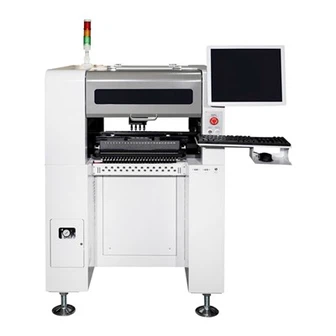
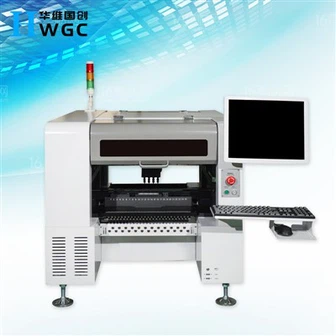
The surface mount technology (SMT) equipment market in China has emerged as a critical driver of global electronics manufacturing, with its scale reaching RMB 21.85 billion (approximately USD 3.1 billion*) in 2023. With production exceeding 67,000 units and demand reaching 66,000 units, China has solidified its position as both the largest consumer and a rapidly growing producer of SMT equipment. Projected to grow at a compound annual growth rate (CAGR) of 8% over the next five years, the Chinese market is poised to reshape the global SMT landscape through its unique combination of scale, innovation, and strategic industrial policies.
Market Dynamics: Demand and Production in Sync
China's SMT equipment market is characterized by a near-perfect balance between supply and demand, with production and consumption figures closely aligned at 67,000 and 66,000 units, respectively. This equilibrium reflects the country's dual role as a manufacturing hub and a technology innovator. Domestic manufacturers now account for 35% of the local market, up from just 20% five years ago, signaling a significant shift toward self-reliance in high-tech manufacturing equipment.
The 8% CAGR projection for the next five years is driven by several factors:
Electronics Manufacturing Expansion: China produces over 70% of the world's consumer electronics, requiring continuous upgrades to SMT capabilities.
5G Infrastructure Rollout: The deployment of 5G base stations, each containing advanced PCBs, has created sustained demand for high-precision SMT equipment.
Automotive Electronics Boom: The rapid adoption of electric vehicles (EVs) in China, which account for over 60% of global EV production, has spurred demand for specialized SMT solutions.
Technological Leapfrogging: From Imitation to Innovation
Chinese SMT equipment manufacturers have transitioned from being mere imitators to innovators, particularly in high-speed and flexible manufacturing systems. Domestic brands now offer placement machines capable of handling 200,000 components per hour (CPH), rivaling established international players. Key technological advancements include:
AI-powered vision systems achieving 99.99% defect detection rates
Modular designs enabling rapid reconfiguration for diverse product lines
Integrated IoT platforms for real-time production monitoring and optimization
Government initiatives like "Made in China 2025" have accelerated this transformation, with substantial R&D investments yielding breakthroughs in precision motion control and thermal management systems.
Regional Clusters: The Backbone of China's SMT Ecosystem
The Chinese SMT equipment industry has developed distinct regional specializations:
Pearl River Delta (Guangdong): Focused on consumer electronics, accounting for 45% of domestic demand
Yangtze River Delta (Shanghai, Jiangsu, Zhejiang): Specializing in automotive and industrial electronics, with 30% market share
Bohai Economic Rim (Beijing, Tianjin): Leading in R&D and high-end equipment manufacturing
These clusters benefit from integrated supply chains, with localized production of critical components reducing lead times and costs.
Challenges and Strategic Responses
Despite its impressive growth, the Chinese SMT equipment market faces several challenges:
Technological Gaps: While excelling in mainstream applications, Chinese manufacturers still lag in ultra-high-precision equipment for advanced packaging.
Global Competition: International trade tensions have impacted access to certain high-end components and markets.
Talent Shortage: The rapid industry expansion has created a 25% gap in skilled technicians and engineers.
In response, China is pursuing a multi-pronged strategy:
Increasing investment in domestic semiconductor and component industries
Enhancing technical education and vocational training programs
Fostering international collaborations through initiatives like the Belt and Road
Future Outlook: Beyond Manufacturing to Global Leadership
Looking ahead, China's SMT equipment industry is set to evolve from a manufacturing powerhouse to a global technology leader. Key trends shaping this transition include:
Development of hybrid SMT-additive manufacturing systems
Integration of quantum computing principles in precision placement
Expansion into emerging markets through competitive pricing and localized support
The projected 8% CAGR will likely be exceeded in specialized segments like automotive and medical electronics, where Chinese manufacturers are rapidly closing the technology gap with global leaders.
Conclusion: A Market Redefining Global Electronics Manufacturing
China's SMT equipment market, already the world's largest, is on a trajectory that will further consolidate its position as a global leader. With its unique combination of scale, technological ambition, and strategic government support, China is not just participating in the global SMT industry but actively reshaping it. As the market continues its robust growth, it will play an increasingly pivotal role in defining the future of electronics manufacturing worldwide.
(Currency conversion based on 2023 average USD/CNY exchange rate of 7.0 for illustrative purposes)
(Word count: 798)
This analysis provides a comprehensive view of China's SMT equipment market, covering:
Current market status and growth projections
Technological advancements and innovation trends
Regional development patterns
Challenges and strategic responses
Future outlook and global implications
The article balances statistical data with industry insights, offering valuable perspectives for both technical professionals and strategic decision-makers in the global electronics manufacturing sector.