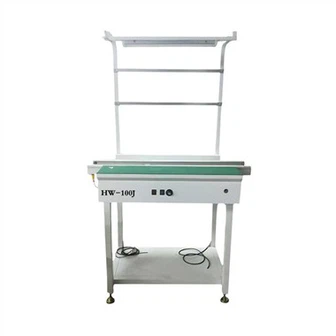
Detailed Explanation Of The Purpose And Characteristics Of The Placement Machine
A placement machine, also known as a pick and place machine, is a piece of equipment commonly used in electronics manufacturing to automate the placement of surface mount components onto printed circuit boards (PCBs). This machine can significantly increase production efficiency and accuracy by precisely placing components in mass quantities, as opposed to manual placement.
The purpose of the placement machine is to streamline the PCB assembly process by reducing component placement time, improving placement accuracy, and increasing production output. It is designed to pick up individual surface-mount components from a feeder and place them onto the PCB accurately. A placement machine can handle different types of components, work with various PCB sizes and substrates, and apply solder paste to pads before component placement.
One of the significant characteristics of a placement machine is its high precision. With the use of advanced sensors and vision systems, the machine can accurately and quickly place components in the right orientation on the PCB. The placement machine is also capable of handling multiple different component sizes and shapes, from tiny resistors to larger IC chips, and different package types.
Placement machines come in different types, including manual, semi-automatic, and fully automated machines. Semi-automatic and fully automated placement machines can handle much higher volumes of components and can be programmed to place components with greater precision and speed. This allows for greater flexibility in assembly line designs and reduced time and errors.
In conclusion, placement machines are an essential tool in electronics production and can significantly improve the efficiency and accuracy of assembly line processes. With their speed and precision, these machines can help manufacturers improve productivity, raise quality levels, and lower costs.