What is the working principle of the placement machine
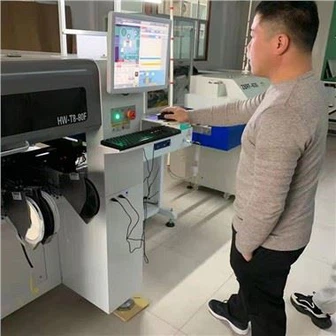
The placement machine, also known as a pick and place machine, is an essential tool used in the electronics industry to automate the assembly of electronic components onto printed circuit boards (PCBs). The working principle of the placement machine involves a highly sophisticated and precise process of handling the component feed, placement, and soldering.
The process starts with a reel or tray of electronic components fed onto the machine. The components are then picked and transferred by machines, including robotic arms, onto a nozzle for accurate positioning onto the PCB. The nozzle is equipped with a vacuum system that holds the component gently in place and ensures no contamination during the transfer.
The placement machine then uses a camera system to detect the position and orientation of the component on the nozzle. This is important to ensure that the component is placed with precise accuracy onto the PCB. The machine uses a high-speed placement head to accurately place the component onto the PCB.
After placement, the PCB is then moved to the next stage, where the component is soldered onto the board. Soldering is a critical process that connects the component leads to the PCB. The soldering process can be done through a variety of methods, including wave soldering, reflow soldering, and others.
The placement machine's working principle ensures that the components are accurately placed onto the PCB, significantly reducing the possibility of errors. This, in turn, ensures that the finished PCB is of a high quality, reliable, and efficient.
In conclusion, the placement machine is an essential tool for the electronics industry. Its sophisticated working principle ensures accuracy, precision, and speed, ultimately resulting in the delivery of high-quality electronic products.