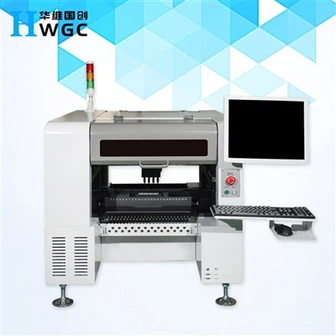
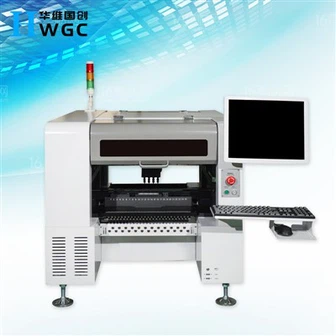
Pick - and - Place Machines in Consumer Appliance Electronics: Practical Advantages
Pick-and-place machines have become increasingly popular in the consumer appliance electronics industry due to their numerous practical advantages. These machines are used to assemble electronic components onto printed circuit boards (PCBs) rapidly and accurately, making them an indispensable tool for manufacturers.
One of the most significant advantages of pick-and-place machines is their ability to work quickly and efficiently. These machines can place electronic components on PCBs at a rate of up to 90,000 parts per hour, depending on the machine's specifications. This level of speed and precision cannot be matched by human workers, making pick-and-place machines an ideal solution for high-volume production.
Another practical advantage of these machines is their ability to reduce errors and increase accuracy. With automated placement of components, the risks of incorrect placement or omission of parts are significantly reduced. This increases the quality and reliability of electronic devices, resulting in fewer product defects and customer complaints.
Furthermore, pick-and-place machines are also highly customizable and adaptable to the specific needs of different manufacturers. These machines can be programmed to handle different component types and PCB sizes, allowing them to cater to a variety of production needs. Additionally, pick-and-place machines can handle complex components such as fine-pitch surface-mount components, which are difficult to assemble manually.
In conclusion, the practical advantages of pick-and-place machines make them an indispensable tool for the consumer appliance electronics industry. They increase production speed, accuracy, and consistency while reducing errors and defects, resulting in higher product quality and customer satisfaction.