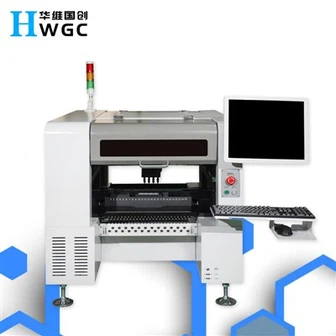
Overview of SMT Machines
### 1. Overview of SMT Machines
**1. Definition**
A Surface Mount Technology (SMT) machine is an automated device used to precisely place electronic components (such as resistors, capacitors, integrated circuits, etc.) onto printed circuit boards (PCBs).
**2. Working Principle**
- **Feeding System**: Components are fed into the machine via feeders (e.g., tape reels, trays, tubes, etc.).
- **Vision System**: Cameras identify the positions of components and PCBs to ensure accurate placement.
- **Placement Head**: Nozzles pick up components and place them onto designated positions on the PCB.
- **Control System**: Coordinates the operation of various parts to ensure efficient performance.
### 2. Classification of SMT Machines
**1. By Speed**
- **High-Speed SMT Machines**: Suitable for small components with fast placement speeds.
- **Medium-Speed SMT Machines**: Balance speed and precision, suitable for a variety of components.
- **Low-Speed SMT Machines**: Used for large or irregularly shaped components, offering high precision but slower speeds.
**2. By Function**
- **Multi-Functional SMT Machines**: Capable of handling various components with high flexibility.
- **Dedicated SMT Machines**: Designed for specific components or processes, offering high efficiency but limited flexibility.
### 3. Core Components of SMT Machines
**1. Feeders**
- **Types**: Tape feeders, tray feeders, tube feeders, etc.
- **Function**: Deliver components to the placement head.
**2. Vision System**
- **Function**: Identify the positions of components and PCBs to ensure placement accuracy.
- **Components**: Cameras, lighting systems, image processing software, etc.
**3. Placement Head**
- **Function**: Pick up and place components.
- **Types**: Single-head, multi-head, rotary-head, etc.
**4. Control System**
- **Function**: Coordinate the operation of various components to ensure efficient performance.
- **Components**: PLCs, motion control cards, software, etc.
### 4. Application Fields of SMT Machines
**1. Consumer Electronics**
- **Products**: Smartphones, tablets, laptops, etc.
- **Characteristics**: Miniaturized components with high placement accuracy requirements.
**2. Automotive Electronics**
- **Products**: Engine control units, sensors, in-car entertainment systems, etc.
- **Characteristics**: High reliability requirements and complex operating environments.
**3. Industrial Control**
- **Products**: PLCs, industrial computers, sensors, etc.
- **Characteristics**: Wide variety of components with high placement accuracy requirements.
**4. Medical Electronics**
- **Products**: Medical instruments, monitoring devices, diagnostic equipment, etc.
- **Characteristics**: High reliability requirements and miniaturized components.
### 5. Market Analysis of SMT Machines
**1. Market Size**
- **Global Market**: The global SMT machine market is expected to reach XX billion USD by 2023.
- **Chinese Market**: The Chinese SMT machine market is expected to reach XX billion RMB by 2023.
**2. Major Manufacturers**
- **International Manufacturers**: Siemens, Panasonic, Fuji, Yamaha, etc.
- **Domestic Manufacturers**: Huawei, ZTE, Han's Laser, etc.
**3. Market Trends**
- **Intelligentization**: Integration of AI and machine learning to enhance automation.
- **High Precision**: Meeting the demands of miniaturized and high-density component placement.
- **Green Manufacturing**: Reducing energy consumption and waste to improve environmental performance.
### 6. Technological Development Trends of SMT Machines
**1. High Precision and High Speed**
- **Technology**: Adoption of high-precision servo motors and advanced vision systems.
- **Goal**: Improve placement accuracy and speed.
**2. Intelligentization and Automation**
- **Technology**: Integration of AI and machine learning for intelligent inspection and automatic adjustments.
- **Goal**: Enhance production efficiency and product quality.
**3. Flexibility and Modularity**
- **Technology**: Modular designs to support quick line changes and multi-functional integration.
- **Goal**: Improve equipment flexibility and adaptability.
**4. Green Manufacturing**
- **Technology**: Use of energy-efficient motors and eco-friendly materials to reduce energy consumption and waste.
- **Goal**: Enhance environmental performance.
### 7. Guidelines for Selecting SMT Machines
**1. Production Requirements**
- **Capacity**: Choose an SMT machine with appropriate speed based on production scale.
- **Component Types**: Select an SMT machine with suitable functions based on component types.
**2. Precision Requirements**
- **Placement Accuracy**: Choose an appropriate precision level based on product requirements.
- **Vision System**: Select a vision system with high resolution and recognition rates.
**3. Budget**
- **Equipment Cost**: Choose a machine that fits the budget.
- **Operating Costs**: Consider energy consumption, maintenance, and consumable costs.
**4. After-Sales Service**
- **Technical Support**: Choose a manufacturer that provides comprehensive technical support.
- **Spare Parts Supply**: Ensure timely availability of spare parts.
### 8. Maintenance and Care of SMT Machines
**1. Routine Maintenance**
- **Cleaning**: Regularly clean the surface and interior of the equipment.
- **Lubrication**: Regularly lubricate moving parts.
**2. Regular Maintenance**
- **Inspection**: Periodically inspect key components (e.g., servo motors, vision systems).
- **Replacement**: Regularly replace wear-prone parts (e.g., nozzles, feeders).
**3. Troubleshooting**
- **Common Issues**: Such as placement deviations, component recognition errors, etc.
- **Solutions**: Take appropriate measures based on the issue (e.g., adjusting parameters, replacing parts).
### 9. Industry Standards and Certifications for SMT Machines
**1. Industry Standards**
- **International Standards**: Such as IPC standards, ISO standards, etc.
- **Domestic Standards**: Such as GB standards, SJ standards, etc.
**2. Certifications**
- **CE Certification**: Mandatory certification in the EU.
- **UL Certification**: Mandatory certification in the US.
- **RoHS Certification**: Environmental certification.
### 10. Future Outlook for the SMT Machine Industry
**1. Technological Innovation**
- **New Materials**: Adoption of new materials to enhance equipment performance.
- **New Processes**: Introduction of new processes to improve production efficiency and product quality.
**2. Market Expansion**
- **Emerging Markets**: Exploration of emerging markets (e.g., India, Southeast Asia).
- **New Application Fields**: Expansion into new application areas (e.g., 5G, IoT).
**3. Industry Chain Integration**
- **Upstream and Downstream Integration**: Integration of upstream and downstream resources to enhance competitiveness.
- **Cross-Industry Collaboration**: Collaboration with other industries to develop new products and applications.
### Conclusion
As a core equipment in electronics manufacturing, SMT machines will continue to evolve toward high precision, high speed, intelligentization, and green manufacturing with technological advancements and changing market demands. Enterprises must keep pace with industry trends, continuously improve their technical capabilities and market competitiveness to address future challenges and opportunities.