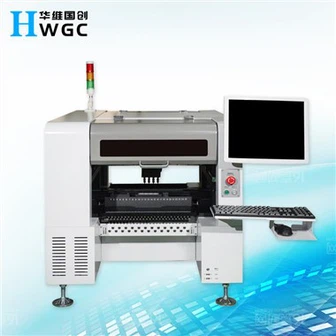
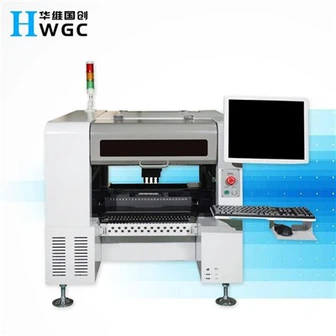
Exploring the Pick and Place Machine Industry: How Technical Principle Innovations Drive the Development of Ultra-High-Speed Pick and Place Machines, with Speeds Exceeding 40,000 Pieces per Hour
The evolution of technology has brought about significant improvements in various sectors, including the manufacturing industry. In particular, the pick and place machines used in the assembly of products have undergone impressive advancements. From low-speed mechanics to high-speed optics, the machines have become more multifunctional and modular, allowing for improved efficiency and precision in production.
Low-speed mechanical pick and place machines were once widely used in the manufacturing industry. These machines relied on mechanical components such as gears, belts, and pulleys to move products from one location to another. While they were effective, they had limitations in terms of speed and functionality. They were also less adaptable to changes in production requirements.
However, with the advent of high-speed optics, the pick and place machines have become more versatile. The use of optics has allowed for faster and more precise movement of products, leading to increased efficiency. Additionally, the machines have become more modular, allowing for customization to suit specific production needs.
The integration of multifunctionality and modularity in pick and place machines has revolutionized the manufacturing industry. Manufacturers can now produce different products using the same machine by changing the tooling and programming parameters. This flexibility has reduced the need for multiple machines, resulting in cost savings and increased productivity.
In conclusion, the evolution of pick and place machines from low-speed mechanics to high-speed optics has significantly improved their functionality and efficiency. Multifunctionality and modularity have made the machines adaptable to changing production requirements, resulting in cost savings and increased productivity. As technology continues to advance, we can expect further improvements in the manufacturing industry, leading to more efficient and sustainable production processes.