Sustainability in SMT Assembly: How Pick-and-Place Machines Contribute To Green Manufacturing
In recent years, there has been a growing concern about the impact of manufacturing on the environment. As the world becomes more conscious about environmental sustainability, the electronics industry is also gradually moving toward green manufacturing. Surface-mount technology (SMT) assembly, one of the most commonly used methods in the production of electronic circuits, has recently taken significant steps to contribute to this movement. In particular, pick-and-place machines have played a crucial role in promoting sustainability in SMT assembly.
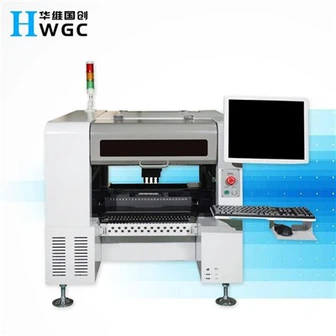
Pick-and-place machines are automated devices used to place electronic components onto a printed circuit board (PCB). They have become increasingly popular in SMT assembly due to their precision and efficiency in handling small and delicate components. However, these machines also have a significant impact on environmental sustainability. By automating the placement process, pick-and-place machines significantly reduce manual labor, which not only improves the quality of the product but also reduces the amount of waste generated from human error.
Moreover, pick-and-place machines can help save energy and reduce greenhouse gas emissions. These machines have a feature called "idle mode," which automatically shuts off the machine when it is not in use. This feature significantly reduces energy consumption, keeping the machine in good condition while also saving electricity. A study conducted by the National Renewable Energy Laboratory found that the payback period of idle mode features is less than 2 years, indicating the long-term feasibility and economic benefits of investing in green manufacturing practices.
Additionally, pick-and-place machines contribute to the recycling and reusing of electronic components. These machines can precisely place components onto the PCB, ensuring that components are accurately placed and that there is minimal damage to the components. This precision results in fewer defective components, which can be reused or recycled. This process decreases electronic waste, conserves resources and reduces the potential environmental hazards of electronic waste disposal.
In conclusion, the use of pick-and-place machines in SMT assembly is an excellent example of how technology can help promote environmental sustainability in manufacturing. By reducing manual labor and incorporating energy-saving features like idle mode, these machines significantly contribute to the conservation of resources, reduction of waste and overall reduction of greenhouse gas emissions. With the growing awareness of environmental issues, it is crucial for the electronics industry to adopt green manufacturing practices, and incorporation of pick-and-place machines is a step in the right direction.